ENGED 370 – Chapters 13 & 14: Instructional Materials & Making the Transition to Center Area Texts

Chapter 13: Instructional Materials
Chapter 14: Making the Transition to Center Area Texts
Kaitlin Roth

Key Concepts Chapter 13: 
components of a basal, lesson framework of a lesson in a basal, modifying basal lessons, evaluating reading materials for instruction

Key Concepts Chapter 14:
readability, textmaster roles, idea sketches, trade books, literature across the curriculum, schema, literature web, narrative informational texts, expository informational books, mixed-text informational books, previewing, skimmig, organizer, graphic organizer, anticipation guides, point-of-view guides, idea circles, curriculum-based reader’s theater, i-charts, internet inquiry, WebQuest

Basal Reading Approach: A major approach to reading that occupies the central and broadest position on the instructional continuum. Built on scope and sequence foundations and traditionally associated with bottom-up theory, basal programs have been modified in recent years with the inclusion of language experience and literature activities.

Components of a Basal
A brief overview of some of the similar components that are part of almost every basal series

  • Emergent Literacy: often organized thematically, include a variety of support materials, and capitalize on children’s curiosity about print to get them excited about reading & making predictions.
  • Beginning Reading: New basic sight words are introduced, high frequency sight words accumulate.
  • Strategy Lessons: Many options for strategies are suggested for individual and group lessons and activities to teach sight vocabulary, phonics, structural analysis, and use of context, and the newest basals have strategies in the teacher’s edition as well as the students editions.
  • Comprehension Strand: Comprehension is stressed strongly with prereading, during reading, and postreading strategies and lessons. The teacher’s manual suggests numerous ideas for extending children’s understandings and for making the connection to writing.
  • Language Arts: Creating a literacy environment by integrating reading, writing, listening, and speaking to each grade level in promoted; some programs outline strategies to merge the language arts. Learning centers, workshops, group discussions, cooperative learning projects, library corners, technology, and art and music centers may be set up.
  • Management: Systematic instruction of reading or language arts programs provides teachers with goals and objectives along with teaching plans and assessment tools, all toward the outcome of documenting individual student and class progress.
  • Assessment: Teachers are given numerous types of formal and informal assessment options. The new approach of progress monitoring of student performance and attitudes toward the language arts is geared to inform teachers’ instructional decision making and students’ understanding of their progress toward their own goals.
  • Differentiation: Differentiating instruction in the classroom and then intervening for students who need further support are the newest common features of core reading programs. In order to differentiate, resources from small group instruction to workstations and technology are provided.

Lesson Framework of a Lesson in a Basal

  • Motivation & Background Building
  • Guided Reading (Silent & Oral)
  • Skill Development & Practice
  • Follow-Up and Enrichment

IMG_1281

Modifying Basal Lessons: As teachers become more familiar with instructional strategies, they try them out in their classrooms. Many use alternative strategies in conjunction with their basal anthologies.

  • modifying lessons personalizes reading instruction for teachers & students
  • the most important one is the need to adapt in order to meet the special needs of the students

Evaluating Reading Materials for Instruction: Questions to ask in evaluating reading materials

  • What is the overall philosophy of the program? How is reading discussed in the teacher’s guide?
  • What kind of learning environment does the program recommend? Is it child-centered? Teacher-centered? Literature-centered? Skills-based?
  • How well does the program integrate across the curriculum? In what ways is assessment connected to daily instruction? What opportunities are there for connections between the various language arts?

Readability: The relative accessibility or difficulty of a text. Sentence length and word difficulty are among the elements used in formulas that assign grade-level readability scores for text materials.

Textmaster Roles: Roles similar to those used in literature circles, but are used here for reading textbook material.

Idea Sketches: Graphic organizers that students complete in small groups as they read textbook material.

Trade Books: Literature and informational books widely available in bookstores; used by teachers to supplement or replace sole dependence on textbooks in reading or content area instruction.

Literature Across the Curriculum: There are many benefits to using trade books and literature across the curriculum.

  • Trade books and other literature provide students with intense involvement in a subject, for others they are powerful schema builders
  • They may be used to accommodate a wide range of student abilities and interests
  • With trade books, children may choose from a variety of topics for intensive study and inquiry
  • Literature may be used instructionally in a variety of ways

Schema: Mental frameworks that humans use to organize and construct meaning.

Literature Web: Any graphic device that illustrates the relationships among the major components in a unite of study.

Image result for literature web

Narrative Informational Texts: Books in which the author typically tells a story that conveys factual information.

Expository Informational Books: Books that contain information that typically follows specific follows specific text structures such as description, sequence, cause and effect, comparison and contrast, and problem solving.

Mixed-Text Informational Books: Sometimes referred to as combined-text trade books; stories are narrated and factual information surrounds the story.

Previewing: Establishing purposes and priorities before reading to help students become aware of the goals of a reading assignment.

Skimming: Involves intensive previewing of the reading assignment to see what it will be about.

  • Learning how to skim content material effectively is a natural part of previewing
  • To help students get a good sense of what is coming, have them read the first sentence of every paragraph
  • Previewing and skimming are important strategies for helping students develop knowledge of textbook aids and for surveying texts to make predictions

Organizer: Provides a frame of reference for comprehending text precisely for this reason–to help readers make connections between their prior knowledge and new material.

Graphic Organizer: Any diagram of key concepts or main ideas that shows their relationships to each other.

Image result for graphic organizer examples

Anticipation Guides: A series of written or oral statements for individual students to respond to before reading text assignments.

Point-of-View Guides: An instructional activity for supporting comprehension in which readers approach a text selection from various perspectives or points of view.

Idea Circles: A literature circle in which readers engage in discussions on concepts they have been exploring in trade books and other types of texts.
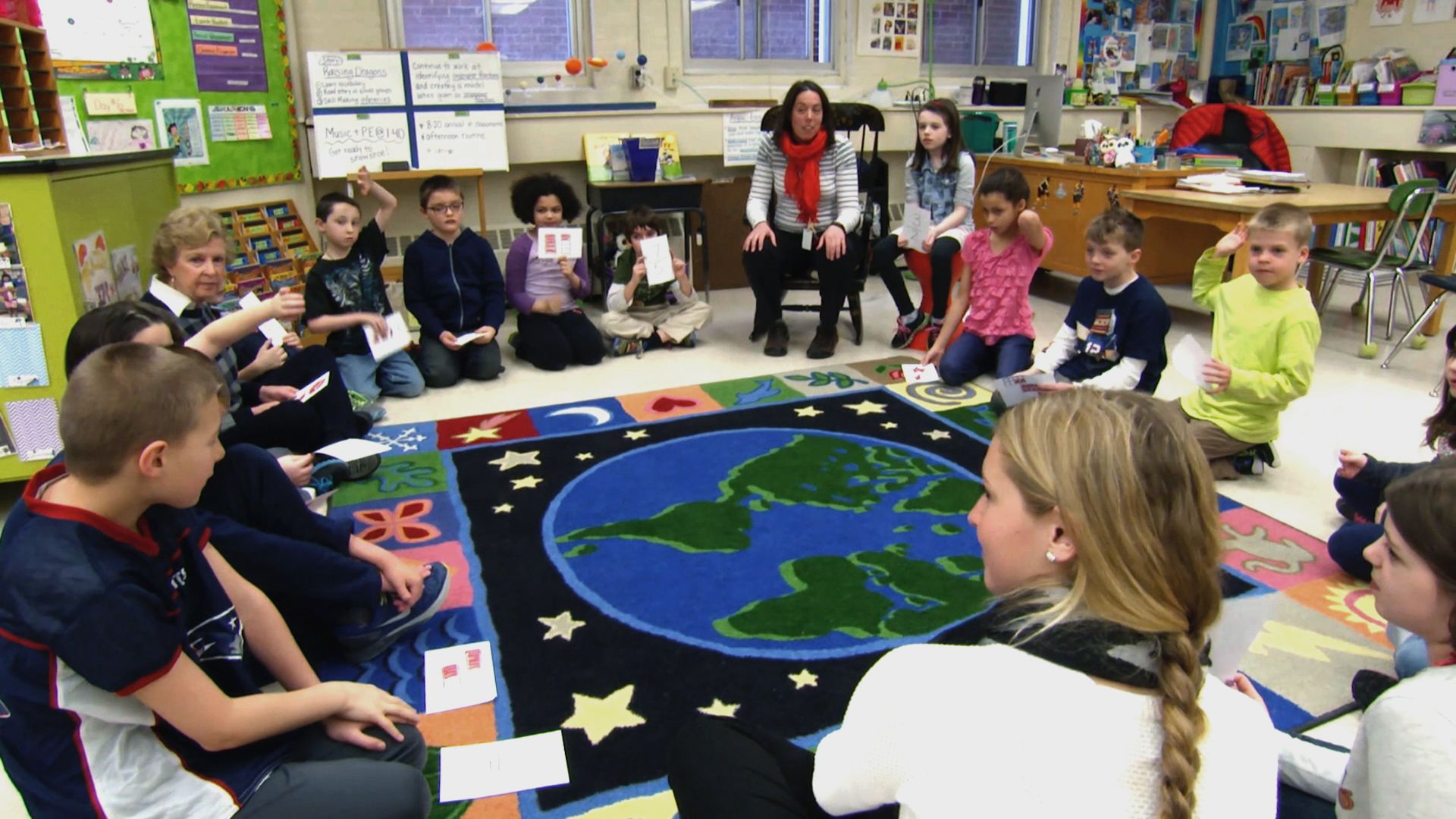
Image result for idea circles in classrooms

Curriculum-Based Reader’s Theater: A strategy in which students work in small groups to create sections of content text in the form on an entertaining play.

Inquiry Charts (I-Charts): A chart that helps students research, organize, and integrate information from multiple text sources.

Image result for i-chart example elementary classrooms

Internet Inquiry: An instructional strategy designed to help students engage in research on the Internet based on the questions they raise or their interests in various topics in study.

WebQuest: An electronic model in which Internet inquiry is organized to support student learning.

Image result for webquest

Classroom Application

  • There are several factors that contribute to determining whether or not a book is difficult
  • There are many benefits to the students and to the teachers for using nonfiction trade books as well as electronics texts
  • Strategies to use prior to reading include graphic organizers, skimming/previewing, anticipation guides, and brainstorming techniques.
  • “The transition to content area reading should not post major obstacles.”
  • Teachers must understand and use materials wisely
  • The appearance, organization, illustrations, and success with basals in attributed to publishing authentic literature and reducing stereotyping
  • “Teachers make decisions daily about instruction best suited to the children in their classrooms. They balance the needs of students with all the materials available.”

ENGED 370 – Chapter 12: Bringing Children & Literature Together

Chapter 12: Bringing Children and Literature Together
Kaitlin Roth

Key Vocabulary and Concepts
literature-based reading program, community of readers, how to hook students on books, selecting a classroom collection of books, how to choose classroom literature, determining good literature, multicultural literature, designing a classroom library, listening to literature, reading aloud, helping students choose just right books, core books, literature circles, reading workshop, roles in literature circles, responses to literature, read-response theory

Literature-Based Reading Program: A major approach to reading that encourages students to select their own trade books, with the sessions followed by teacher-student conferences at which students may be asked to read aloud from their selections; used by teachers who want to provide for individual student differences in reading abilities while focusing on meaning, interest, and enjoyment.

  • Literature-based reading programs create a community of readers
  • Classrooms are carefully structured environments that reflect a teacher’s commitment to literature as a natural medium for children’s reading & language learning as well as a source of fun & satisfaction

“Children who read more, read better.”

How to Hook Students on Books: 

  • Hooking children on books helps them realize their literacy potential
  • The teacher plays a critical role in creating a literature environment that motivates students to read

IMG_1264 (1)

Selecting a Classroom Collection of Books:

  • A major classroom characteristic that brings children and books together is many carefully selected books
  • The books should come from different sources – a mix between teacher’s collection, the school library, the public library, paperback book clubs, and e-books
  • Should frequently have a selection on new books available
  • Focus on quality of literature provided, not quantity
  • Provide a broad collection of books that appeal to all ability levels
  • Have the classroom literature reflect the teacher’s love for literacy

How to Choose Classroom Literature: 

  • Read & enjoy children’s books for yourself
  • Read children’s books with a sense of involvement
  • Read a variety of book types
  • Read books for a wide variety of ability levels
  • Share how your students respond to particular books with other teachers or other university students
  • Start by reading several books of good quality

Determining Good Literature:

  • The collection needs to contain modern, realistic literature as well as traditional literature
  • The collection needs to contain books with different types of themes and books varying difficulty
  • The collection needs to include nonfiction

Multicultural Literature: 

  • Books help celebrate people’s distinctive differences & understand common humanity
  • Culturally diverse books in the U.S. typically tell the stories of people of color–African Americans, Native Americans, Asian Americans, and Hispanic Americans.
  • Culturally diverse books may also represent the literature of regional white and religious groups or the cross-cultural stories of people from other nations
  • What culturally diverse books have in common is they all portray what is unique to an individual culture and universal to all cultures

Designing a Classroom Library:

  • Use book clubs and book fairs like Scholastic Book Clubs and Scholastic Book Fairs
  • Ask students/parents/families to donate books
  • Solicit donations of old books. At the end of the year, ask students to donate books or magazines they’ve outgrown
  • Yard sales and thrift stores are also good sources of old books
  • Some libraries sell duplicate or outdated books

Listening to Literature:

  • Children learn that literature is a source of pleasure from teachers encouraging students to become interested in the world of books through listening to stories & poems.

    Reading aloud must be incorporated into all aspects of the curriculum

  • Choose literature to read aloud
  • Prepare to read aloud
  • Set the mood for literature sharing time
  • Introduce the story
  • Activities after read aloud
  • Allow others to present literature
  • Allow storytelling

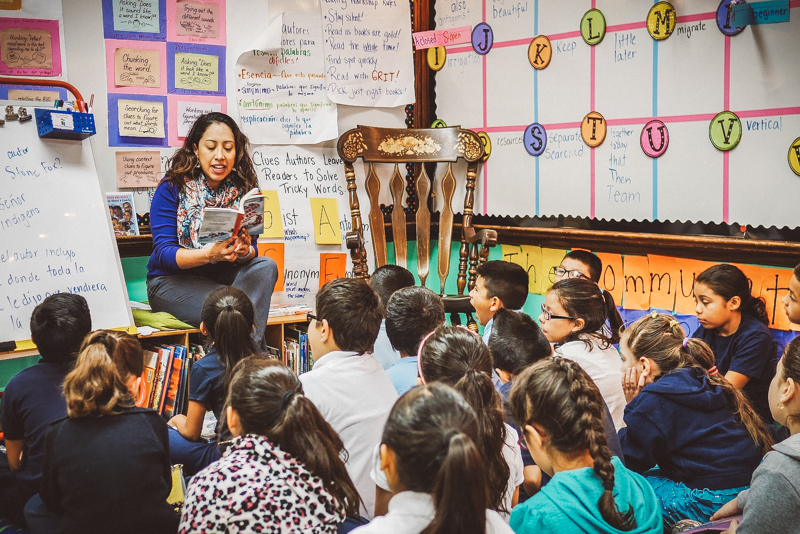
Reading Aloud: Generally a group event in which literature is read orally.

Image result for read aloud

Helping Students Choose Just Right Books: 

Core Books: Collection of books that forms the nucleus of a school reading program at each grade level; usually selected by a curriculum committee.

Reading Workshop: Method, introduced by Nancie Atwell, for integrating the language arts around literature through an organizational framework that allows readers to demonstrate reading strategies by responding to books and sharing meaning with their peers.

  • Spark interest
  • Minilessons
  • Status-of-the-class Report
  • Sustained Silent Reading
  • Individual Reading Conferences
  • Group Sharing Time

Literature Circles: Discussion or study group based on a collaborative strategy involving self-selection of books for reading; each group consists of students who independently selected the same book.

Image result for literature circles

Roles in Literature Circles:

Image result for roles in literature circles

Responses to Literature: Teachers create responsive environments in their classrooms by inviting students of all abilities and from diverse backgrounds to react to literature through various symbols systems and modes of expression

  • oral responses
  • written responses
  • blogs
  • art projects
  • drawings
  • pictures
  • creative dramas
  • role playing
  • computer-generated projects

Reader-Response Theory: The belief that responsibility for constructing textual meaning resides primarily with the reader and depends to a great extent on the reader’s prior knowledge and experience.

Videos

  • Classroom organization and organizing your classroom library https://www.youtube.com/watch?v=XdmI4K5wJu4

    – Kids need to be collaborative & be team players – consider arranging desks in groups
    – Create a “home base” in the classroom
    – Have a classroom library — can even feature a student author
    – In the classroom library, have levels readily known so students can pick out their own leveled books
    – Word wall with big font

  • Selecting a good fit book https://www.youtube.com/watch?v=3cc8mJf5Z4s

    – Read a bit first to see if you can read the words on the pages before you check it out
    – Listen to self reading to see if it sounds fluid
    – Read with expression
    – Understand what is being read

  • Five finger check for selecting a book https://www.youtube.com/watch?v=6cW3E9xOMvA

    – Too hard = more than 5 “tricky” words
    – Too easy = read very fast
    – Just right = there are “bumpy” parts, but not too many

  • Reading Workshop Overview https://www.teachingchannel.org/videos/reading-workshop-overview

    – “Teach every student every single day & work with them on what they need”
    – Make physical & mental connections to the reading
    – Mini-lesson
    – Silent reading

  • Reader’s Workshop Mini-Lesson during Silent Reading https://www.teachingchannel.org/videos/silent-reading-lesson-plan

    – Silent reading, shouldn’t actually be silent in the students’ heads, but should involve a lot of “brain activity”
    – Help students self-monitor so they can recognize when they’re not comprehending something when there reading so they can ask for help or partner with another student
    – Keep track of what students need to become a better reader

Classroom Application

  • Teachers should create a classroom environment that supports & promotes reading & writing
  • Allow time every day for ‘daily’ reading & writing activities –create a routine
  • Allow students to respond to literature in a variety of ways — such as journals, partners, groups, whole class discussions, literature circles
  • The classroom environment should be motivating, inspirational, and supportive so students feel they can express themselves through literature and/or have reading be an outlet
  • Create some sort of reading center in the classroom — make it cozy, organized, & provide a variety of genres & levels
  • The more children read, the better they will read
  • When selecting classroom books, don’t focus on the quantity, focus on the quality of the books that are available to the students
  • Have the classroom literature reflect the teacher’s love for literacy

ENGED 270 – Chapter 11: Reading-Writing Connections

Chapter 11: Reading-Writing Connections
Kaitlin Roth

Key Vocabulary and Concepts:

relationships between reading and writing and what the research states, how to create an informal writing environment,  suggestions to encourage classroom writing, what can students write about, writing activities, dialogue journal, buddy journal, key pals, double-entry journals, reading journals, response journals, writing notebooks, multi-genre projects, plot scaffolds, traditional writing process, writing process according to authors, brainstorming, writing workshop, mini lessons, group share sessions, guided writing, how to use technology to teach writing 

Relationships between Reading and Writing & What the Research States

“Reading & writing have been described as two sides of the same process.”

  • Both reading & writing are language based
  • Both are experienced based
  • Both require active involvement from language learners
  • Both must be viewed as acts of making meaning for communication
  • Reading & writing processes are correlated
  • Students who write well tend to read more than those who are less capable of writers
  • Wide reading may be as effective in improving writing as actual practice in writing
  • Good readers and writers are likely to engage in reading and writing independently because they have healthy concepts of themselves as readers & writers

How to Create an Informal Writing Environment

  • Provide several options on what activities students can do (letters, notes, create your own book, etc)
  • Have a writers center in the classroom
  • Have various supplies readily available (markers, fun scissors, construction paper, etc)
  • Show/post examples of writing pieces students can do
  • Let students choose their topic

Image result for writers center classroom

“When a teacher encourages students to write, they engage in reading activities in varied and unexpected ways.”

Suggestions to Encourage Classroom Writing

  • Use students’ experiences and encourage them to write about things they are interested in
  • Develop sensitivity to good writing by reading poetry and literature to students
  • Invent ways to value what students have written
  • Guide the writing personally — as students are writing, circulate around the room to help and encourage
  • Write stories and poetry as your own and share them with the students
  • Tie in writing with the entire curriculum
  • Start a writing center in your classroom
  • Create a relaxed atmosphere

What Can Students Write About

IMG_1216

Writing Activities

Dialogue Journal: A journal written as a conversation between child and teacher that emphasizes meaning while providing natural, functional experiences in both writing and reading.

Buddy Journal: Written conversations between children in a journal format; promotes student interaction, cooperation, and collaboration.

Key Pals: The electronic equivalent of pen pals.

Double-Entry Journals: A two-column journal format that gives students an opportunity to identify passages from texts and explore in writing why those passages are interesting or meaningful.

Reading Journals: A journal used in conjunction with literary texts. After a period of sustained reading, teachers use prompts to guide students’ written responses to the text.

Response Journals: A journal entry without a teacher prompt.

Writing Notebooks: Places where students can gather observations, thoughts, reactions, ideas, unusual words, pictures, and interesting facts for future writing.

Multigenre Projects: A paper that is a collection of genres that reflect multiple responses to a book, theme, or topic.
Examples of genres are postcards, letters, posters, and comic strips. 

Plot Scaffolds: An open-ended script in which students use their imaginations to create characters, a setting, a problem, and a solution.

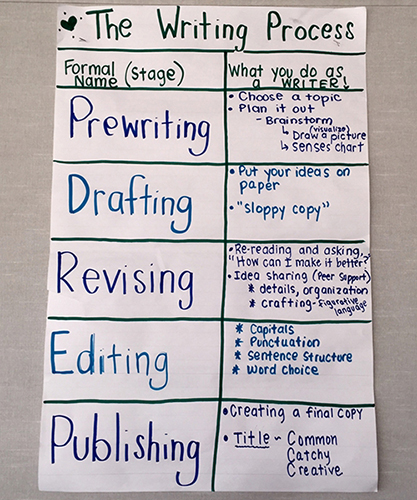
Traditional Writing Process

  • Students brainstorm what they want to write about
  • Students draft their thoughts
  • Students revise their thoughts after input from the teacher or peers
  • Students edit their writing for errors
  • Students publish their writing

Image result for brainstorming writing process

Writing Process According to Authors

Brainstorming: Prereading activity that identifies a broad concept reflecting the main topic to be studied in an assigned reading and organizes students in small groups to generate a list of words related to the topic.

Writing Workshop: Classroom writing time during which students are given the structure and direction they need to understand, develop, or use specific writing strategies in planning and revising drafts.

Mini Lessons: A brief, direct instructional exchange between teacher and students to address specific, observed learning needs of students.

Group Share Sessions: purpose is to have writers reflect on the day’s work and focuses on concerns like “How did your writing go today?”

Guided Writing: An instructional framework in which teachers guide students as they write.

How to Use Technology to Teach Writing

  • Electronic texts (internet, CD’s, videos)
  • Computers aiding in the word process
    – desktop publishing
    – multimedia authoring software programs
  • Ebooks

Image result for ebooks

Classroom Application

  • Reading & writing processes are correlated = good readers are generally good writers & good writers are generally good readers
  • Reading & writing should go hand in hand and should be learned together
  • Throughout the stages of the writing process, the students need feedback not only from the teacher, but also from their peers
  • “Reading is a natural springboard into students’ writing.”
  • Electronic texts are becoming more popular because they are engaging and interactive

ENGED 370 – Chapter 10: Reading Comprehension

Chapter 10: Reading Comprehension
Kaitlin Roth

Key Vocabulary and Concepts
scaffolding instruction, literal questions, inferential questions, evaluative questions, active comprehension, ReQuest, QAR’s, QtA, reciprocal teaching, think-alouds, story map, general and specific comprehension questions, schema, activities to build schema for stories, macrocloze stories, scrambled stories, story frames, circular story map, DR-TA, KWL, discussion webs, story impressions, text connections: text to self, text to text, text to world

Scaffolding instruction: Instruction in which teachers model strategies step by step and provide guided practice, followed by independent practice & application.

Image result for scaffolding instruction

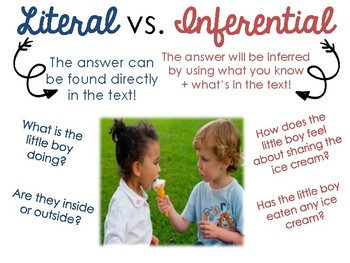
Literal questions: Questions that are based on explicitly stated information in the text.

Inferential Questions: Questions in which the reader uses background knowledge and information from the text.

Image result for literal vs inferential questions

Evaluative Questions: Questions that focus on making a judgement about what is read.

Image result for evaluative questions

Active Comprehension: Using prior knowledge, schemata, and metacognition to construct textual meaning; fostered by using questioning during reading.

ReQuest: Reciprocal questioning that encourages students to ask their own questions about material they have read.

IMG_1187

Question-Answer Relationships (QAR’s): A comprehension strategy that enhances children’s ability to answer comprehension questions by teaching them how to find the information they need to respond. ‘

IMG_1188

Question the Author (QtA): A comprehension-centered instructional strategy designed to show readers how to question the author’s intent while reading.

Reciprocal Teaching: An instructional strategy that builds readers’ awareness of and expertise in the use of various comprehension skills and strategies.

Image result for Reciprocal Teaching

Think-alouds: A comprehension strategy in which students students talk about their thoughts as they read aloud.

Story Map: An analysis of a story’s organizational elements; used to strengthen instructional decisions.

General and Specific Comprehension Questions

Image result for General and Specific Comprehension Questions: 

Schema: Mental frameworks that humans use to organize and construct meaning.

  • It informs a person about what to expect from a variety of experiences and situations. Schemata is just the plural of schema, it’s also called schemas.

Activities to Build Schema For Stories: The following activities and suggestions will help students build a sense of story and reinforce their awareness of story structure.

  • Read, Tell & Perform Stories in Class: These types of experiences with stories are as paramount in the middle grades as they are in the beginning grades.

“There is no better substitute for building experience with stories
(or extending students’ knowledge of how stories are put together)
than to read, tell, and perform stories in class on a regular basis.” 

  • Show Relationships Between Story Parts: Flowcharts reflect best practices for mapping relationships that exist between events in the story. Flowcharts give children a visual image of how stories are organized.
  • Reinforce Story Knowledge Through Instructional Activities: Children’s understanding of story structure can be extended through varied instructional tasks. Examples of activities include: macrocloze stories, scrambled stories, story frames, and circular story maps.

Macrocloze Stories: Stories given to students with passages deleted from the text; students read the stories and discuss the missing text either orally or in writing.

Image result for macro cloze stories

Scrambled Stories: Stories separated into parts and jumbled; students read the stories and put them back together in order.

Story Frames: Skeletal paragraphs represented by a sequence of spaces tied together with transition words and connectors signaling lines of thought; frames can empathize plot summary, setting, character analysis, character comparison, and problem.

Image result for story frames

Circular Story Map: A visual representation using pictures to depict the sequence of events leading to the problem in a story.

Direct Reading-Thinking Activity (DR-TA): An activity that builds critical awareness of the reader’s role and responsibilities in interacting with the text through the process of predicting, verifying, judging, and extending thinking about text material.

Image result for Directed Reading-Thinking Activity

KWL: What do you know? What do you want to find out? What did you learn? Three-step teaching model designed to guide and motivate children as they read to acquire information from expository texts.

Image result for discussion webs

Discussion Webs: A strategy used in cooperative learning that requires students to explore both sides of issues during post-reading discussions before drawing conclusions.

Image result for discussion webs

Story Impressions: Rereading strategy that helps students anticipate what stories could be about, using content fragments to make predictions.

Image result for story impressions

Text Connections
A comprehension strategy in which students are encouraged to share how texts relate to themselves, to other texts, or to the world. 

Text to Self: Asks students to share what a piece of fiction or nonfiction text reminds them of personally. This could be related to the plot of the story, the actions of the characters, or the setting.

Text to Text: Asks students to recall another text that reminds them of the one they’re reading. For a higher level, students might recognize similar problems in stories, similar character traits or similar settings.

Text to World: Is more inferential in nature because it asks students to make connections beyond the story. Reserved for older students who are capable of making higher level inferences and connections.

Classroom Application

  • Literal vs Inferential questions: literal is based on the text’s info and is concrete while inferential is an inference made from the text and can vary.
  • Scaffolding can be used for ALL learners — there are various ways to scaffold instruction.
  • When showing relationships between between parts of a story, flowcharts are a great visual for kids to understand how a story is organized.
  • Circular story mapping and story frames both help students organize and visualize important events in story and help build connections within the text.
  • Discussion Webs and DR-TA help the readers expand beyond the text and make inferences and predictions on what will happen or could happen.
  • When using the text connections strategy, there are three different types of connections: text to self, text to text, and text to world.

ENGED 370 – Chapter 9: Vocabulary Knowledge and Concept Development

Chapter 9: Vocabulary Knowledge and Concept Development
Kaitlin Roth

Key Vocabulary and Concepts:
aptitude hypothesis, knowledge hypothesis, instrumental hypothesis, vocabulary, components of vocabulary, Principles to Guide Vocabulary Instruction, Strategies for Vocabulary and Concept Development, synonyms, antonyms, think sheets, categorization, multiple-meaning words, word sorts, concept circles, semantic mapping, analogy, paired-word sentence generation, predictogram, self-selection strategy, word knowledge rating

Aptitude Hypothesis: the belief that vocabulary and comprehension reflect general intellectual ability.

Knowledge Hypothesis: the suggestion that vocabulary and comprehension reflect general knowledge rather than intellectual ability.

Instrumental Hypothesis: belief in a casual chain between vocabulary knowledge and comprehension; that is, if comprehension depends in part on the knowledge of word meanings, vocabulary instruction should influence comprehension.

IMG_1148

Vocabulary: the panoply of words we use, recognize, and respond to in meaningful acts of communication.

Components of Vocabulary: listening, speaking, reading, and writing

  • These components are said to develop in depth in order listed

Principles to Guide Vocabulary Instruction: six principles to guide the teaching of vocabulary in elementary classrooms.

  • Principle 1: Select words that children will encounter while reading literature and content material
    – key words
    – useful words
    – interesting words
    – vocabulary building words
  • Principle 2: Teach words in relation to other words
  • Principle 3: Teach students to relate words to their background knowledge
  • Principle 4: Teach words in prereading activities to activate knowledge and use them in post-reading discussion, response, and retelling
  • Principle 5: Teach words systematically and in depth
  • Principle 6: Awaken interest in and enthusiasm for words


Strategies for Vocabulary and Concept Development
opportunities for incidental instruction and reinforcement arise in content area instruction throughout a school day

“Best practice in vocabulary instruction begins with the teacher’s commitment to teach words well.”

Synonyms: words similar in meaning to other words

Antonyms: words opposite in meaning to other words

Think Sheets: list of questions used to elicit responses about texts for discussion purposes.

Categorization: critical manipulation of words in relation to other words through the labeling of ideas, events, or objects.

Multiple-Meaning Words: are words that have the same spelling and usually sound alike, but have different meanings.

  • gives students opportunities to see how words operate in context

Image result for multiple meaning words

Word Sorts: vocabulary development through categorization activities with groups of words.

Image result for word sorts

Concept Circles: a vocabulary activity in which students identify conceptual relationships among words and phrases that are partitioned within a circle

Image result for concept circles

Semantic Mapping: a strategy that shows readers and writers how to organize important information.

Image result for semantic mapping

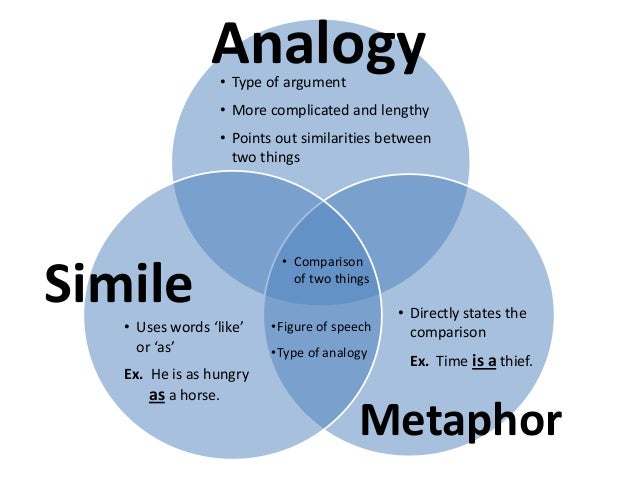
Analogy: a comparison of two similar relationships

Image result for analogy

Paired-Word Sentence Generation: teaching strategy that asks students to take two related words and create one sentence that correctly demonstrates an understanding of the words and their relationship to one another.

Examples:
Reptiles are cold-blooded.
Snakes, lizards, and turtles are reptiles.
Cold-blooded means that when the air is warm, their bodies are warm, and when the air is cold, their bodies are cold.

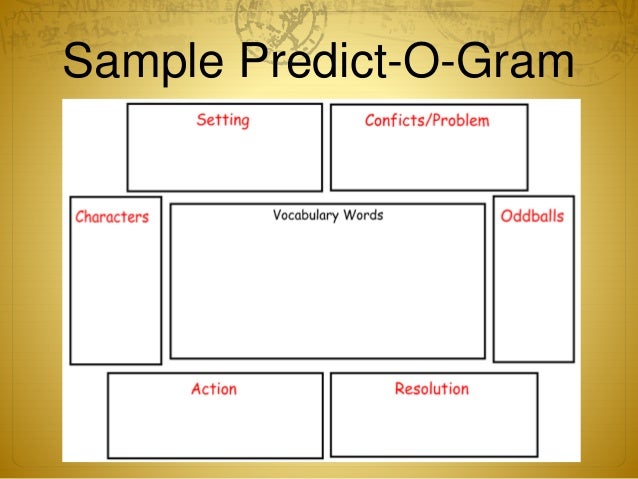
Predictogram: a strategy that develops students’ meaning vocabulary through the use of story elements.

Image result for predictogram

Self-Selection Strategy: A strategy that helps students monitor their own vocabulary growth by selecting unknown vocabulary words.

Word Knowledge Rating: A strategy that helps students develop an awareness of how well they know vocabulary words by rating themselves on their knowledge of words based on continuum.

Classroom Application

  • Components of vocabulary are listening, speaking, reading, and writing and develop in that order
  • There are six principles to guide vocabulary instruction. Principle one focuses on what words to select, principles 2-5 focus on how to teach them and in what ways, and lastly principle 6 focuses on creating interest for the students
  • Self-section strategy helps students monitor their own personal development with unknown vocabulary words
  • Concepts circles and semantic mapping are both graphic organizers that help students organize information. However, concepts circles focus more so on vocabulary terms and how they relate to one another where as semantic mapping focuses more on differences between concepts
  • Paired-Word Sentence Generation is a great teaching strategy for students to demonstrate their understanding of words and their relation to one another

ENGED 370 – Chapter 8: Reading Fluency

Chapter 8: Reading Fluency
Kaitlin Roth

Terms
fluency, effective fluency instruction, mediated word identification, automaticity, prosody, predictable text, types of predictable texts, strategies to assist with fluency: choral reading, echo reading, fluency-orientated reading instruction (FORI), readers’ theater, repeated readings, paired readings, fluency development lesson (FDL), automated reading, oral recitation lesson (ORL), support reading strategy, cross-age reading, what parents can do at home to help their student become a fluent reader, assessing fluency, reading rate, WPM 

Fluency: the ability to read easily and well. 

Effective fluency instruction

  • Instruction: should incorporate the teaching of basic skills such as phonemic awareness & phonics as well as model what fluency looks like
  • Practice: includes the use of decodable text and other independent-level texts to strengthen the sounds and spelling that are taught in the classroom
  • Assessment: can be done relatively easily and requires little time

Mediated word identification: implies that the reader needs more time to retrieve words from long-term memory.

  • both phonics & structural analysis involve mediated word identification
  • readers use mediating strategies when they don’t have in place a well-developed schema for a word

Automaticity: the automatic, almost subconscious recognition and understanding of written text. 

Prosody: the patterns of rhythm and sound used in poetry.

  • reading aloud with pitch, stress, & timing to convey meaning

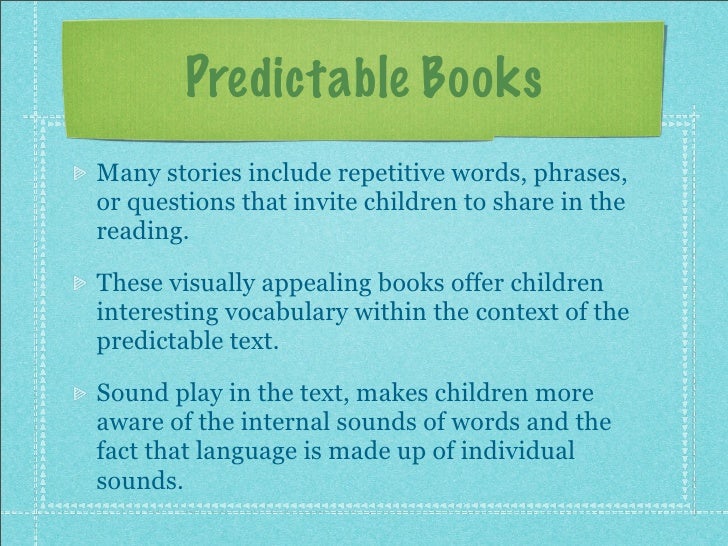
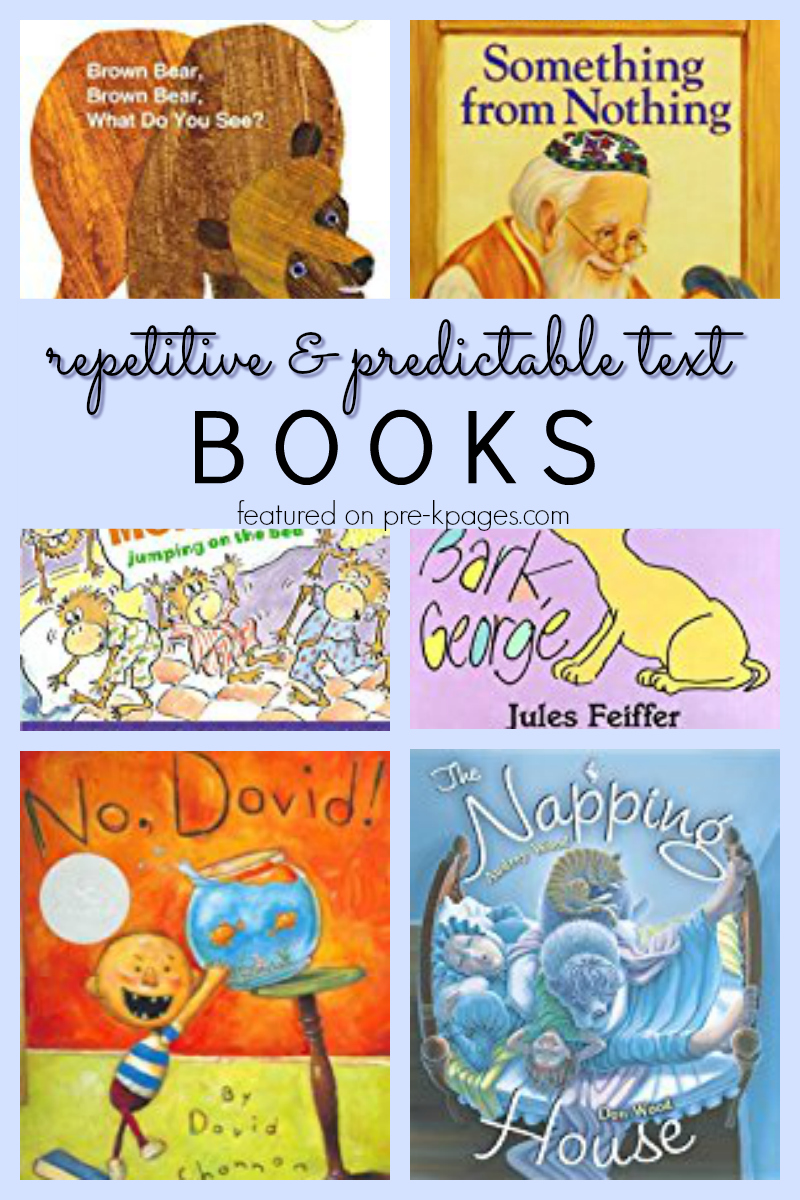
Predictable text: literature that is distinguished by familiar or predictable characteristics of setting, story line, language patterns, or rhyme and consequently can promote fluency.

Image result for predictable text

Image result for examples predictable text

Types of predictable texts

  • Chain or circulatory: plot is interlinked so that the ending leads back to the beginning
    Example: If You Give a Mouse a Cookie
  • Cumulative: each time a new event occurs, all previous events in the story are repeated
    Example: Gingerbread Man 
  • Pattern: scenes are repeated through out the story with some variation
    Example: The Three Billy Goats Gruff
  • Question & answer: the same or similar questions are repeated throughout the story
    Example: Brown Bear, Brown Bear, What Do You See? 
  • Repetition of phase: word order in a phrase or sentence is repeated
    Example: Goodnight Moon
  • Rhyme: rhyming words, refrains, or patterns are used throughout the story
    Example: Is Your Mama a Llama? 
  • Songbooks: familiar songs with predictable elements, such as repetitive phrase
    Example: Over in the Meadow 

Strategies to assist with fluency
to really improve fluency, students need explicit instruction focused on accuracy in word decoding, automatic reading, prosody, and how to self-monitor in order to improve their own fluency.

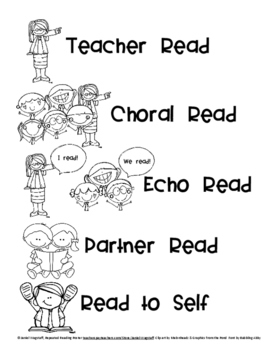
Choral reading: oral reading, often of poetry, that makes use of various voice combinations and contrasts to create meaning or highlight the tonal qualities of a passage. 

Image result for choral reading

Echo reading: is a rereading strategy designed to help students develop expressive, fluent reading as well as used for print knowledge. In echo reading, the teacher reads a short segment of text, sometimes a sentence or short paragraph, and the student echo it back.

Image result for echo reading

Fluency-orientated reading instruction (FORI): developed for whole group instruction with a grade-level basal reader although many teachers use this strategy with grade-level trade books. 

  • FORI – incorporates the research-based practices of repeated, assisted reading with independent silent reading within a three-part classroom program
  • three components are a reading lesson that includes teacher-led, repeated oral reading and partner reading, a free-reading period at school, and home reading
  • the purpose of the FORI is to build fluency and comprehension through repeated reading, text-related discussion, and teacher support and guidance before and after reading

Readers’ theater: the oral presentation of drama, prose, or poetry by two or more readers.

Image result for readers theatre

Repeated readings: reading short passages of text more than once, with different levels of support, to develop rapid, fluent oral reading. 

Paired readings: structured collaborative work involving pairs of children of the same or different reading ability to foster reading fluency.

Fluency development lesson (FDL): an instructional framework designed to develop oral reading fluency. It incorporates the use of various repeated reading techniques such as choral reading and paired reading routines. 

Automated reading: a reading approach in which students listen individually to audiorecorded stories while reading along with the written text. 

Oral recitation lesson (ORL): lesson that makes use of direct instruction and student practice, including reading in chorus, as a means of incorporating fluency into daily reading instruction. 

Support reading strategy: a strategy designed to develop the ability to read fluently by combining several instructional elements. 

Cross-age reading: a routine for fluency development that pairs upper-grade readers with younger children

What parents can do at home to help their student become a fluent reader

  • read more
  • read aloud
  • reread familiar texts
  • echo-read
  • use predictable books

Assessing fluency: the quickest and most informal way to assess fluency is to listen to the student read orally. 

  • help teachers determine if their instructional approaches are working and if more instruction is needed for some students

Reading rate: the number of correct words per minute assesses both accuracy (the number of words the reader is able to identify), and automaticity (aka reading rate). 

WPM or WCPM: words per minute or words correct per minute. An assessment in which readers read aloud for 1 minute from materials used in their reading lessons. The teacher notes words read incorrectly. The assessment tracks change in reading rates and accuracy over time and assesses the appropriateness of the text’s difficulty. 

  • To calculate the WCPM score, subtract the total number of errors from the total number of words read in one minute

Classroom Application

  • Fluency vs Automaticity: fluency is the ability to read with automaticity
  • Readers theatre: helps develop fluency through repeated practice reading scripts
  • Predictable text/books: helps students recognize that words are made up of individual sounds
  • Cross-age reading: not the same as pairing an advanced reader with a lower-level reader. Cross age reading helps model how an older student should read and helps promote development in fluency
  • WPM/WCPM: the assessment can assess the appropriateness of a text’s difficulty
  • Fluent Reader @ Home: children become fluent readers through practice so they need lots of opportunities to read not only at school, but at home as well

ENGED 370 – Chapter 7: Word Identification

Chapter 7: Word Identification
Kaitlin Roth

word attack, word analysis, word recognition, decoding, phonics, prealphabetic phase, partial alphabetic phase, full alphabetic phase, consolidated alphabetic phase, onsets, rimes, analytic phonics, synthetic phonics, linguistic instruction, decodable text, digraphs, consonant blends, dipthongs, syllables, analogy-based instruction, developmental stages of word learning and spelling, embedded phonics instruction, phonograms, making words, word walls, high-frequency words, cloze sentences, cross-checking, self-monitoring, structural analysis, morpheme and inflected endings

Word Attack: Word-attack strategies help students decode, pronounce, and understand unfamiliar words. They help students attack words piece by piece or from a different angle. Model and instruct students:

  • use picture clues
  • sound out the word
  • look for chunks in the word
  • connect to a word you know
  • reread the sentence
  • keep reading
  • use prior knowledge

Word Analysis: also called “phonics” or “decoding,” is the process of using the relationships between spelling and pronunciation at the letter, syllable, and word levels to figure out unfamiliar words.

  • Word Analysis instruction can be very effective in helping beginning readers learn to read with understanding

Word Recognition: the ability of a reader to recognize written words correctly and virtually effortlessly. It is sometimes referred to as “isolated Word Recognition” because it entails a reader’s ability to recognize words individually from a list without the benefit of surrounding words for contextual help.

Decoding: the conscious or automatic processing and translating of the printed word into speech

Phonics: a method of teaching people to read by correlating sounds with letters or groups of letters in an alphabetic writing system

Pre-alphabetic Phase: students read words by memorizing their visual features or guessing words from their context

Partial Alphabetic Phase: students recognize some letters of the alphabet and can use them together with context to remember words by sight

Full Alphabetic Phase: In the full alphabetic phase of decoding, the major sound-symbol relationships for each letter are used systematically. A person early in this phase is apt to decode many words letter-by-letter. They will likely use initial and final letters as decoding cues.

snip

snip

Consolidated Alphabetic Phase: In the consolidated alphabetic phase of decoding, the sequence of letters in a word becomes salient. A person in this phase groups common patterns of letters and sounds as units. This allows the child to decode multi-syllable, novel, and nonsense words by analogy.

Onsets: the initial part of a word (a consonant, consonant blend, or digraph) that precedes the vowel

Rimes: the part of the letter pattern in a word that includes the vowel and any consonants that follow; also called a phonogram or word family

Analytic Phonics: an approach to phonics teaching that emphasizes the discovery of letter-sound relationships through the analysis of known words

Synthetic Phonics: a building block approach to phonics intended to foster the understanding of letter-sound relationships and develop phonic knowledge and skill

Linguistic Instruction: a traditional approach to teaching phonics popular in the 1960’s.

Decodable Text: text that is written with a large number of words that have phonetic similarities; there is typically a match between the text and the phonics elements that the teacher has taught.

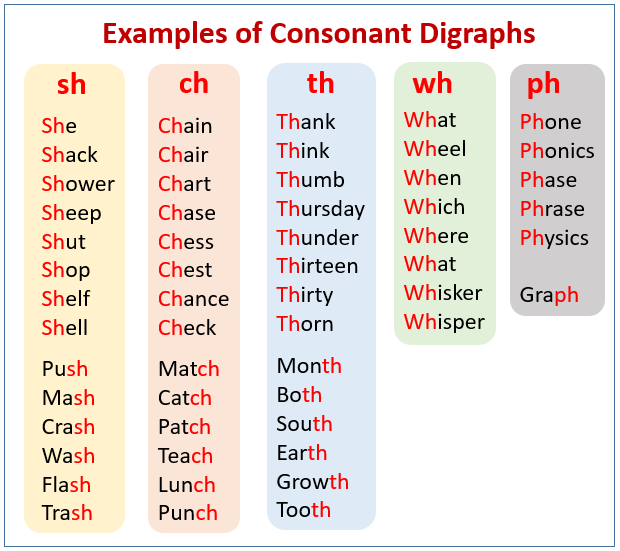
Digraphs: a combination of two letters representing one sound, as in ph and ey.

Image result for digraphs

Consonant Blends: Two or more consonants, when combined make a certain sound and two sounds are heard

Image result for consonant blends

Dipthongs: Two vowels, when combined make a certain sound and not necessarily the sound of either vowel present

Digraphs: Two consonants, when combined make a certain sound and one sound is heard

Image result for consonant blends diphthongs

Syllables: a unit of pronunciation having one vowel sound, with or without surrounding consonants, forming the whole or a part of a word

  • a unit of organization for a sequence of speech sounds
  • are often considered the phonological “building blocks” of words

Analogy-Based Instruction: sometimes referred to as analogic phonics, analogy-based instruction teaches children to use onsets and rimes they already know to help decode unknown words

Developmental Stages of Word Learning and Spelling: (see image below)

snip

Embedded Phonics Instruction: often called holistic, meaning-centered instruction, embedded phonics teaches phonics within the context of stories that make sense to children

Phonograms: letter clusters that help form word families or rhyming words (see rime definition above)

Making Words: flip books make students aware of their word-making capability when they substitute different consonants at the beginning of a rime. To engage children in the process of making words, consider these steps:

  • decide on the rime that you wish students to practice, and develop a rime card for each of the students. Ex: all
  • develop a set of consonant letter cards for each student that can be used to make words with the rime that has been targeted for practice. Ex: b, c, f, h, m, t, w
  • direct students to use the letter cards to make the first word, ball
  • invite students to now change the word to make the word, call
  • repeat the activity until all the words have been made

Word Walls: words compiled of sheets of shelf paper hung on the wall of a classroom. Words walls are used by teachers to engage students in word study for a variety of instructional purposes.

High-Frequency Words: words that appear often in printed material

  • a word that is immediately recognized as a whole and does not require word analysis for identification
  • Good readers instantly recognize high frequency words without having to decode them.
  • Sight words are usually “high-frequency”words, which occur most frequently in our language.

Cloze Sentences: are sentences in which key words are deleted, covered up or blocked out. When presented with cloze sentences, students must use context clues to determine the missing word.

Image result for cloze sentences

Cross-Checking: using letter-sound information and meaning to identify words

Image result for cross checking reading

Self-Monitoring: being aware of miscues, the pronunciation of unknown words, and comprehension processes during reading to develop the ability to correct oneself

Structural Analysis: a word recognition skill that involves identifying words in meaningful units such as prefixes, suffixes, and root words. Structural analysis also includes being able to identify inflected endings, compound words, and contractions.

Morpheme: the smallest meaningful unit of a word. For example, /un/ is a morpheme that means not.

Inflected Endings: suffixes that change the tense or degree of a word. Examples include /s/ , /es/ , /ies/ , /d/ , /ed/ , /er/ , /ier/ , /est/ .

Classroom Application: 

  • Teachers play a very important and crucial role in a child’s life at this age because they help students with word identification which is the base of reading and writing.
  • Have students do hands on activities to decode text and create their own words, rather than just worksheets
  • Meaning cues, phonics cues, and structure of words create a powerful tool that we as teachers can teach students for word identification
  • Students need to have a variety of experiences with words such as with books, oral and printed language, and be provided plenty of opportunities to write (not just in adult language, but they’re own language too), so that they can explore the world of reading & writing
  • Teachers need to use real-life examples in order for students to connect what they’re learning to their life experiences


ENGED 370 – Chapter 6: Assessing Reading Performance

ENGED 370 – Chapter 6: Assessing Reading Performance
Kaitlin Roth

Vocabulary Terms Used: 

high-stakes testing, authentic assessment, retelling, formative assessment, self-assessment, formal assessments, standardized tests, norms, reliability, validity, types of test scores, types of assessments, diagnostic test, criterion-references tests, informal assessments, informal reading inventory, independent reading level, instructional reading level, frustrational reading level, miscues, miscue analysis, running record, analyzing running record, words per minute, DIBELS, portfolios, anecdotal notes, checklist, interviewing

High Stakes Testing: the practice of using a single test score for making education-related or personnel decisions

  • the premise is that consequences (good or bad),  are linked to a performance on a test
  • now known as achievement and graduation tests
  • intended to provide the public with a guarantee that students can perform at a level necessary to function in society and in the wordforce

“Assessments should be relied on to improve instruction and benefit the students and not to punish schools or students.”

Authentic Assessment: asking students to perform tasks that demonstrate sufficient knowledge and understanding of a subject

  • students are doing reading & writing tasks that look like real-life tasks
  • students are primarily in control of the reading & writing task

Retelling: an assessment in which students identify and discuss integral parts of a story

Formative Assessment: an assessment that is used to gather information for teachers to adapt instruction to meet students’ needs.

  • ongoing to determine students’ strengths and how learning progresses
  • especially helps to identify the specific learning needs of all readers–including those that have difficulties with English
  • involves noticing details of literate behavior, interpreting students’ understanding and perspective, and knowing what the reader knows

Self Assessment: an assessment in which students identify their strengths and weaknesses to help provide a plan for intervention

Formal Assessments: is a range of formal and informal assessment procedures conducted by teachers during the learning process in order to modify teaching and learning activities to improve student attainment

  • may be norm-referenced or criterion-referenced

Standardized Tests: machine-scored instruments that simple reading performance during a single administration

  • are useful in making comparisons among individuals or groups at the local, state, or national level
  • a norm-referenced test is constructed by administering it to large numbers of students in order to develop norms

Norms: average test scores of a sampling of students selected for testing according to factors such as age, sex, race, grade, or socioeconomic status; basis for comparing the performance of individuals or groups

  • normal progress or performance depends on the representatives of the normal sample

Reliability: consistency of test results over time and administrations

  • refers to the stability of the test
  • the reliability of a test is expressed as a correlation coefficient
  • a statistic tied to the idea of reliability is the standard error of measurement

Validity: the accuracy with which a test measures what it is designed to measure

  • construct validity is established by a test developer that must show the relationship between a theoretical construct (such as reading), and the test that promises to measure the construct
  • content validity reflects how well the test represents the domain or content area being examined
  • predictive validity is most important in order to predict reading outcomes and should accurately predict future performance

Types of Test Scores: to make interpretations properly, one needs to be aware of differences in the types of scores reported on a test

  • grade equivalency score is described as both a growth score and a status score and provides info about reading performance as it relates to students at various grade levels
  • percentiles refers to scores in terms of the percentage of a group the student has scored above
  • stanine refers to a standard nine-point scale–each stanine represents a single digit with a numerical value of 1 to 9

Diagnostic Test: a type of formal assessment intended to provide more detailed information about individual students’ strengths and weaknesses

  • the results are often used to profile students’ strengths and weaknesses of reading performance
  • most are founded on a bottom-up subskills view of reading
  • characterized by a battery of subtests that uses large numbers of items to measure specific skills in areas such as phonics, structural analysis, word knowledge, and comprehension

Criterion-Referenced Tests: formal assessment designed to measure individual student achievement according to a specific criterion for performance

  • have been used in formal situations for districtwide purposes, in classroom situations, and more recently in statewide testing
  • the major premise behind criterion-referenced testing is that the mastery of reading skills should be assessed in relation to specific instructional objectives
  • test performance is measured against a criterion for each objective
  • performance is judged by what a student can or cannot do with regard to the skill objectives of the test

Informal Assessments: informal measures of reading that yield useful information about student performance without comparisons to the performance of a normative population

  • may be given throughout the school year to individuals or groups for specific instructional purposes
  • gauge performance in relation to the students’s success on a particular reading task or a set of reading tasks
  • one of the best uses of informal assessments is to evaluate how students interact with print in oral and silent reading situations

Informal Reading Inventories (IRI): an individual administered reading test

  • usually consists of a series of graded word lists, graded reading passages, and comprehension questions
  • the passages are used to assess how students interact with print orally and silently
  • the information gathered from IRI should allow teachers to pair students with appropriate instruction materials

Independent Reading Level: the level at which the student reads fluently with excellent comprehension.

  • also called the recreational reading level
  • not only will students be able to function on their own, but they will also often have high interest in the material

Instructional Level: the level at which the student can make progress in reading with instructional guidance

  • also referred to as the teaching level
  • the material that is read must be challenging, but not too difficult

Frustration Level: the level at which the student is unable to pronounce many of the words or is unable to comprehend the material fully

  • this is the lowest level of reading a reader is able to understand
  • the material is too difficult to provide a basis for growth

Miscue: replace the term error

“A miscue provides a piece of evidence in an elaborate puzzle; it helps reinforce a positive view of error in the reading process for teachers and students alike.”

Miscue Analysis: informal assessment of oral reading errors to determine the extent to which readers use and coordinate graphic-sound, syntactic, and semantic information

  • can be applied to graded passages from an IRI or to the oral reading of a single passage
  • to analyze miscues, one should ask at least four crucial questions
    1.) Does the miscue change the meaning?
    2.) Does the miscue sound like language?
    3.) Do the miscue and the text word look and sound alike?
    4.) Was an attempt made to correct the miscue?

IMG_1019

IMG_1020

Running Record: an assessment system for determining students’ development of oral reading fluency and word identification skills and strategies

  • used by teachers to guide a student’s approach to learning when needed at frequent intervals, but not daily
  • the teacher calculates the percentage of words the student reads correctly and then analyzes the miscues for instructional purposes

Analyze Running Record: in order to determine appropriate material connections and instructional decisions from running records, the teacher calculates the words read correctly, analyzes the student’s errors, and identifies patterns of errors

  • pay close attention to self-corrections
  • running records provide insights into students’ strengths and weaknesses by allowing teachers to analyze patterns of miscues

IMG_1021

IMG_1022

Words Corrected Per Minute: assessment involves children reading aloud for one minute from materials used in their reading lessons, as the student is reading the text, the teacher crosses out any word read incorrectly.

  • to calculate the score of the reader, the teacher counts the number of correctly read words, records, and then graphs the score in order to track the changes in rates and accuracy over time

Dynamic Indicators of Basic Early Literacy Skills (DIBELS): includes a series of oral reading skill assessments

  • short measures are used to monitor early literacy skills and provide feedback to inform instruction

Portfolios: collections that “document the literary development of a student” and include “evidence of student work in various stages”

  • portfolios organize literacy information in a variety of formats; example: three-ring binders, file folders, and digital
  • serve many purposes including helping teachers and students word together towards four important goals: taking risks, taking responsibility for learning, making decisions about how and what to learn, and feeling in control using language arts to learn

Anecdotal Notes: brief, written observations of revealing behavior that a teacher considers significant to understanding a child’s literacy learning

  • intended to safeguard against the limitations of memory
  • record observations in a journal, on charts, or even on index cards
  • these jottings can become “field notes” and will aid the teacher in classifying information, inferring behavior, and making predictions about individual students or instructional strategies and procedures

Checklists: consists of categories that have been presented for specific diagnostic purposes

  • checklists vary in scope and purpose; they can be short and open ended or longer and more detailed

Interviewing: periodic communication with individual students to assess reading interests and attitudes, self-perceptions, and understanding of the language-learning process

Classroom Application

  • learning about students’ development of new literacies is an outcome of formative assessment
  • validity = one of the most important characteristics of a test
  • some diagnostic tests are individual; others are designed for groups of students
  • informal assessments don’t compare the performance of a tested group or individual to a normative population
  • IRI information can lead to instructional planning that will increase students’ effectiveness with print
  • for portfolios teachers select pieces that show significant growth, effort, and achievement
  • through interviewing, a teacher can discover what students are thinking and feeling

ENGED 370 – Chapter 5: Literacy Instruction for Beginning Readers and Writers

ENGED 370 – Kaitlin Roth
Chapter 5: Literacy Instruction for Beginning Readers and Writers

Emergent Literacy: a concept that supports learning to read in a positive home environment where children are in the process of becoming literate from birth.

– assumes children are always becoming readers & writers and that they are born ready to learn about literacy and continue to grow in their understandings throughout life

IMG_0983

Scaffolding Instruction: instruction in which teachers model strategies step by step and provide guided practice, followed by independent practice & application.

Storybook Experiences: read-alouds, readalongs, interactive reading, interactive writing, rereadings of favorite texts, and independent reading & writing.

Interactive Writing: students and the teacher create a text and write a message. The text is composed by the group, and the teacher assists as students write the text on chart paper. Video Example: https://www.youtube.com/watch?v=s4FsR1xiI5o

Instructional Goals that storybook experiences and interactive writing accomplish: 
– motivate beginners to want to read & write
– help beginners understand what reading & writing are all about
– to encourage beginners to respond to stories by drawing, writing, and dramatizing their explorations of texts
– to teach beginners alphabetic principles of written language
– to teach beginners about directionality–the left-to-right, top-to-bottom orientation of language

Linguistic Awareness: understanding the technical terms and labels needed to talk and think about reading

– the technical features of written language are best taught through real reading and readinglike activities and through discussions designed to build concepts and to untangle the confusion that children may have

“If children are to succeed in reading, they must acquire linguistic awareness and understand the language of reading instruction.”
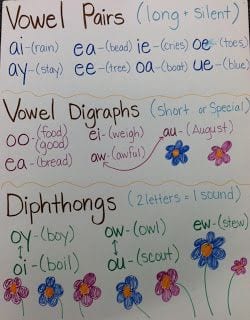
Print Awareness:  refers to a child’s understanding of the nature and uses of print. A child’sprint awareness is closely associated with his or her word awareness or the ability to recognize words as distinct elements of oral and written communication. Both skills are acquired in the child’s natural environment.

Concept of Print: refers to the awareness of ‘how print works’.

– this includes the knowledge of the concept of what books, print, and written language are, and how they function

– it encompasses a number of understandings that allow the reading process to take place including: understanding that print conveys a message

Assessing Concept of Print: Concepts About Print Test

– individually administered to the student

IMG_0985

IMG_0986

Phoneme: any of the perceptually distinct units of sound that distinguish one word from another

Alphabetic Principle: principle suggesting that letters in the alphabet map to phonemes, the minimal sound units represented in written language

Phonics: a method of teaching people to read by correlating sounds with letters or groups of letters in an alphabetic writing system

Phonemic Awareness: an understanding that speech is composed of a series of written sounds; a powerful predictor of children’s later reading achievement.

Phonological Awareness: the ability to hear, recognize, and play with the sounds in our language. It involves hearing the sounds of language apart from meaning

– the recognition that sounds in English can be broken down into smaller and smaller parts: sentences, words, rimes, and syllables
– is auditory and can do phonologically awareness activities with eyes closed

Phonological awareness includes knowing that: 

  • sentences can be segmented into words
  • words can be segmented into syllables
  • words can be segmented into their individual sounds
  • words can begin or end with the same words
  • the individual sounds of words can be blended together
  • the individual sounds of words can be manipulated (added, deleted, or substituted)

Alliteration: the occurrence of the same letter or sound at the beginning of adjacent or closely connected words

– producing groups of words that begin with the same initial sound like two tall trees

Rime: the part of the letter pattern in a word that includes the vowel and any consonants that follow; also called a phonogram or word family

– Example: hat, cat, bat, rat

Phoneme Isolation: is a strategy that helps develop students’phonemic awareness, which is part of phonological awareness.Phoneme isolation involves having students identify specific phonemes in words. Phoneme isolation tasks can be done in conjunction with phoneme segmentation tasks.

Phoneme Identity: Students recognize the same sounds in different words. Teacher: What sound is the same in man, mop, and mill? Student: The first sound, /m/, is the same.

Phoneme Categorization: is a strategy used to help students develop phonemic awareness and recognize individual phonemes in a word. In this strategy, the teacher compiles a small sequence of similar words and asks students to identify the word that has a different or “odd” sound compared to the rest of the words.

-Example: dot, big, doll —> big is the “odd” word because it doesn’t begin with d

Blending: the ability to build words from individual sounds by blending the sounds together in sequence. For example, the learner blends the sounds /m/ , /o/ , /m/ to form the word mom.

Segmenting Beginning and Ending Sounds: children who have developed the capacity to hear sounds in words are able to perform phonemic awareness tasks that require them to isolate and identify the sounds at the beginning or end of a word.

– Example: “What sound do you hear at the beginning of the word pig?” or “What sound do you hear at the end of the word hit?”

Phoneme Deletion Addition and Substitution: these phoneme manipulation tasks require children to take away or add something to make new words. For example, stack without the /s/ is tack. If you have rain and add a /t/ to it you have train.

– these types of activities all require children to manipulate sounds in spoken words

Elkonin Boxes: build phonological awareness skills by segmenting words into individual sounds or phonemes

Figure 5-1

Phonemic Segmentation: the ability to isolate and identify sounds in words

– the most difficult phonemic awareness tasks
– children who can segment separate sounds in a word are considered to be phonemically aware

Schema: describes a pattern of thought or behavior that organizes categories of information and the relationships among them

Classroom Application 

  • Phonemic segmentation is the most difficult task out of all the other phonemic activities
  • Children’s schema’s can either positively affect or negatively affect the way they view reading
  • Elkonin boxes are useful for phonemic awareness activities as well as spelling activities
  • Phonological awareness activities are activities that you can do with only hearing, not seeing, otherwise it’s considered phonics
  • Phonemic awareness activities can be ones that include breaking down words into syllables
  • Phoneme Identity is when students recognize the same sounds in different words
  • Concept of Print refers to the awareness of how print works and includes book handling, text directionality, and book orientation

ENGED 370 – Chapter 4: Early Literacy From Birth to School

ENGED 370 – Kaitlin Roth
Chapter 4: Early Literacy: From Birth to School

Literacy Development: The stages of language experience

Phases of Literacy Development: the continuum of children’s literacy development encompasses a sequence of distinct phases

IMG_0964

  • Phase 1: Awareness & Exploration
  • Phase 2: Experimental Reading & Writing
  • Phase 3: Early Reading & Writing
  • Phase 4: Transitional Reading & Writing
  • Phase 5: Independent & Productive Reading & Writing

Phases of Literacy Power Point—> Describes each literacy phase

Environmental Print: print that surrounds children in their everyday lives, such as traffic signs, restaurant signs, charts, and labels.

Invented Spelling:  a name given to children’s written words before they have learned the rules of spelling and signifies a major leap in writing

– children expect their writing to make sense and to have meaning

– invented spelling signal to parents and teachers that children are beginning to analyze speech sounds in print

– the more children explore letter-sound associations in their writing, the more progress they make toward conventional spelling

– invented spelling helps children place ideas before notions of correctness

“A supportive learning environment encourages beginners to try to spell words as best they can during writing and to experiment with written language without the restrictions imposed by demands for accuracy and correction.”

How Reading Develops:

– children see written language through books, grocery stores, department stores, fast-food restaurants, on television, the computer, signs, and a variety of printed materials = environmental print

– children see family members using written language to follow directions, read recipes, do homework, solve problems, acquire information, or enjoy a story

– children begin learning about reading and writing at very early age by observing and interacting with adults and other children as they use literature in everyday activities

– through experiences, children construct their own concepts about the function and structure of print

– children discover that print is useful

– eventually, children become conventional readers through literacy activities and interactions with adults

“The plethora of print that conforms young children on a daily basis plays a subtle but important role in their desire to understand written language and use it for personal and social means.”

How Writing Develops:

– young children learn writing through exploration

– exploring with a pencil, pretending to write, inventing messages, copying words, and writing labels, messages, or words in a story book

– the key to early writing development is the opportunities a child has to explore print

– scribbling: one of the primary forms of written expression; the fountainhead for writing that occurs from the moment a child grasps and uses a writing tool

Image result for scribbling stages

Literature environment: an environment that fosters and nurtures interest in and curiosity about written language and supports children’s efforts to become readers & writers

Four home factors important to a good start in reading & writing:

  • Access to print & books: literacy learning is facilitated when books are available
  • Adult demonstrations of literacy behavior: children begin to learn about the practical uses of written language and understand why reading & writing activities are worth doing when they see family members use print for various purposes
  • Supportive adults: early readers tend to have parents or other caregivers who are very supportive of their early attempts at literacy and are willing to respond to children’s questions about print
  • Storybook reading: reading to children is positively related to outcomes such as language growth, early literacy, and later reading achievement

IMG_0963

Core Language & Literacy Skills: a core set of skills young children must have in order to become successful readers. To learn to read & write easily, children need to develop experience with these skills within a print-rich environment.

  • Oral Language Comprehension
  • Vocabulary
  • Phonological Awareness
  • Alphabet Knowledge
  • Developmental Writing
  • Print Knowledge

Developing Early Literacy Skills: Research supports instructional priorities and related components that help develop young children’s language and early literacy knowledge and skills.

Routines & Practices that support essential proficiencies:

Shared Reading: the teacher and a class of beginners partake in the reading and rereading of favorite stories, songs, poems, and rhymes.

– a way of creating opportunities for children to learn what a book is, what an “expert” reader does with a book as it is read, and what makes a story a story

”Shared reading offers numerous opportunities to show children what reading is all about.”

Language Experience Activities: Activities using the natural language of children and their background experiences to share and discuss events; listen to and tell stories; dictate words, sentences, and stories; and write independently.

Language experience stories: a language-experience story is a story that is told by the child and written down by the teacher for instructional purposes

  • a child can dictate a complete story, or several children can collaborate on an account by contributing individual sentences
  • as children dictate, it’s important to keep their spoken language intact
  • once the story is written down, the teacher should read it aloud several times, moving left to right, top to bottom, and pointing to each word or line as it is read
  • use conversation to encourage individual or group language experience stories or independent writing

Design of the Classroom Environment:

– a literacy learning environment in the classroom establishes ideal conditions for learning to read in much the same way that home environment of the child establishes ideal conditions for learning to speak

– risk taking is an important factor in literacy learning: a classroom needs to let students feel free to take risks because errors are expected and accepted

Book area: a book area that is orderly, inviting and comfortable with books (ranging in difficulty) that reflect the classroom theme
Listening area: there should be a listening center where children can use headphones to listen to books on CDs, iPods, iPads, or the internet
Computer area: software and online activities should be current and relevant. There should also be a Place near the computer where the children can display the work they’ve done on the computer
Writing area: the area should be stocked with a variety of paper and tools
Materials in the Classroom: materials for reading, drawing, and writing should be available (not just in the writing area). Materials include; pencils, markers, crayons, and paper of different shapes, sizes, and colors
Literacy Related Play Centers: provide an environment where children play with print on their own terms

Videos:

– “spelling opens up remarkable windows in a child’s mind”
– spelling difficulties are often a huge insight to what type of reading difficulties the child may have/will develop
– “spelling is puzzle that everyone can solve once the rules are learned.”
– invented spelling helps a child start to dive deeper into letter-sound relationships

– all students learn differently and in a variety of ways, so it’s important to teach in a variety of ways
– books that are repetitive are best for shared reading because it is catchy and gets the students more involved
– make the story come alive
– after story has been read, ask students questions to stimulate discussion

Classroom Application:

  • There are 5 phases of literacy development; all of which have important identifying factors and providing another stepping stone to a student becoming a successful reader
  • With language experience stories, the child is the story teller while the teacher helps tell it by writing it down
  • In a successful literacy classroom, the environment must have designated areas for the students such as; book area, writing area, computer area, and listening area
  • Shared reading is a great learning activity for those young readers because it helps demonstrate how a expert reader reads
  • Literacy-play centers help to provide an environment where a student is able to chose when and what form of literature/print they want to play with
  • When young children are learning how to read & write, most of their experiences prior to school stem from their parents/caregivers and how they interact with print around the house
  • Invented spelling is on the right path to conventional spelling; the student has learned that their words carry meaning and then discover more about letter-sound associations with their writing