Chapter 13: Instructional Materials
Chapter 14: Making the Transition to Center Area Texts
Kaitlin Roth
Key Concepts Chapter 13:
components of a basal, lesson framework of a lesson in a basal, modifying basal lessons, evaluating reading materials for instructionKey Concepts Chapter 14:
readability, textmaster roles, idea sketches, trade books, literature across the curriculum, schema, literature web, narrative informational texts, expository informational books, mixed-text informational books, previewing, skimmig, organizer, graphic organizer, anticipation guides, point-of-view guides, idea circles, curriculum-based reader’s theater, i-charts, internet inquiry, WebQuest
Basal Reading Approach: A major approach to reading that occupies the central and broadest position on the instructional continuum. Built on scope and sequence foundations and traditionally associated with bottom-up theory, basal programs have been modified in recent years with the inclusion of language experience and literature activities.
Components of a Basal
A brief overview of some of the similar components that are part of almost every basal series
- Emergent Literacy: often organized thematically, include a variety of support materials, and capitalize on children’s curiosity about print to get them excited about reading & making predictions.
- Beginning Reading: New basic sight words are introduced, high frequency sight words accumulate.
- Strategy Lessons: Many options for strategies are suggested for individual and group lessons and activities to teach sight vocabulary, phonics, structural analysis, and use of context, and the newest basals have strategies in the teacher’s edition as well as the students editions.
- Comprehension Strand: Comprehension is stressed strongly with prereading, during reading, and postreading strategies and lessons. The teacher’s manual suggests numerous ideas for extending children’s understandings and for making the connection to writing.
- Language Arts: Creating a literacy environment by integrating reading, writing, listening, and speaking to each grade level in promoted; some programs outline strategies to merge the language arts. Learning centers, workshops, group discussions, cooperative learning projects, library corners, technology, and art and music centers may be set up.
- Management: Systematic instruction of reading or language arts programs provides teachers with goals and objectives along with teaching plans and assessment tools, all toward the outcome of documenting individual student and class progress.
- Assessment: Teachers are given numerous types of formal and informal assessment options. The new approach of progress monitoring of student performance and attitudes toward the language arts is geared to inform teachers’ instructional decision making and students’ understanding of their progress toward their own goals.
- Differentiation: Differentiating instruction in the classroom and then intervening for students who need further support are the newest common features of core reading programs. In order to differentiate, resources from small group instruction to workstations and technology are provided.
Lesson Framework of a Lesson in a Basal
- Motivation & Background Building
- Guided Reading (Silent & Oral)
- Skill Development & Practice
- Follow-Up and Enrichment

Modifying Basal Lessons: As teachers become more familiar with instructional strategies, they try them out in their classrooms. Many use alternative strategies in conjunction with their basal anthologies.
- modifying lessons personalizes reading instruction for teachers & students
- the most important one is the need to adapt in order to meet the special needs of the students
Evaluating Reading Materials for Instruction: Questions to ask in evaluating reading materials
- What is the overall philosophy of the program? How is reading discussed in the teacher’s guide?
- What kind of learning environment does the program recommend? Is it child-centered? Teacher-centered? Literature-centered? Skills-based?
- How well does the program integrate across the curriculum? In what ways is assessment connected to daily instruction? What opportunities are there for connections between the various language arts?
Readability: The relative accessibility or difficulty of a text. Sentence length and word difficulty are among the elements used in formulas that assign grade-level readability scores for text materials.
Textmaster Roles: Roles similar to those used in literature circles, but are used here for reading textbook material.
Idea Sketches: Graphic organizers that students complete in small groups as they read textbook material.
Trade Books: Literature and informational books widely available in bookstores; used by teachers to supplement or replace sole dependence on textbooks in reading or content area instruction.
Literature Across the Curriculum: There are many benefits to using trade books and literature across the curriculum.
- Trade books and other literature provide students with intense involvement in a subject, for others they are powerful schema builders
- They may be used to accommodate a wide range of student abilities and interests
- With trade books, children may choose from a variety of topics for intensive study and inquiry
- Literature may be used instructionally in a variety of ways
Schema: Mental frameworks that humans use to organize and construct meaning.
Literature Web: Any graphic device that illustrates the relationships among the major components in a unite of study.

Narrative Informational Texts: Books in which the author typically tells a story that conveys factual information.
Expository Informational Books: Books that contain information that typically follows specific follows specific text structures such as description, sequence, cause and effect, comparison and contrast, and problem solving.
Mixed-Text Informational Books: Sometimes referred to as combined-text trade books; stories are narrated and factual information surrounds the story.
Previewing: Establishing purposes and priorities before reading to help students become aware of the goals of a reading assignment.
Skimming: Involves intensive previewing of the reading assignment to see what it will be about.
- Learning how to skim content material effectively is a natural part of previewing
- To help students get a good sense of what is coming, have them read the first sentence of every paragraph
- Previewing and skimming are important strategies for helping students develop knowledge of textbook aids and for surveying texts to make predictions
Organizer: Provides a frame of reference for comprehending text precisely for this reason–to help readers make connections between their prior knowledge and new material.
Graphic Organizer: Any diagram of key concepts or main ideas that shows their relationships to each other.

Anticipation Guides: A series of written or oral statements for individual students to respond to before reading text assignments.
Point-of-View Guides: An instructional activity for supporting comprehension in which readers approach a text selection from various perspectives or points of view.
Idea Circles: A literature circle in which readers engage in discussions on concepts they have been exploring in trade books and other types of texts.
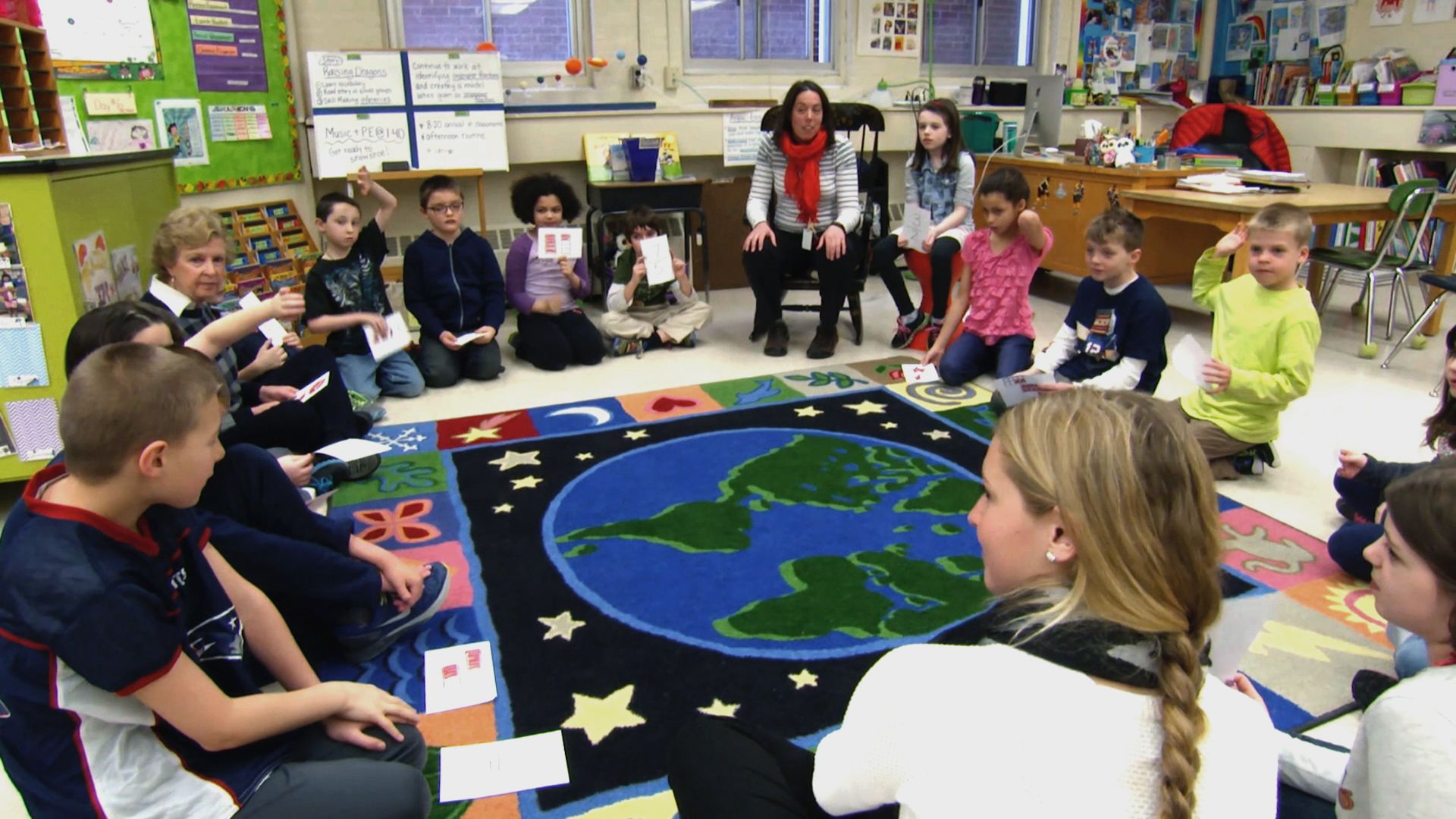
Curriculum-Based Reader’s Theater: A strategy in which students work in small groups to create sections of content text in the form on an entertaining play.
Inquiry Charts (I-Charts): A chart that helps students research, organize, and integrate information from multiple text sources.

Internet Inquiry: An instructional strategy designed to help students engage in research on the Internet based on the questions they raise or their interests in various topics in study.
WebQuest: An electronic model in which Internet inquiry is organized to support student learning.

Classroom Application
- There are several factors that contribute to determining whether or not a book is difficult
- There are many benefits to the students and to the teachers for using nonfiction trade books as well as electronics texts
- Strategies to use prior to reading include graphic organizers, skimming/previewing, anticipation guides, and brainstorming techniques.
- “The transition to content area reading should not post major obstacles.”
- Teachers must understand and use materials wisely
- The appearance, organization, illustrations, and success with basals in attributed to publishing authentic literature and reducing stereotyping
-
“Teachers make decisions daily about instruction best suited to the children in their classrooms. They balance the needs of students with all the materials available.”













 Kaitlin Roth